.avif)
Atomus Aegis. Implemented by Software, Managed by People.
An endpoint agent, a hardened Microsoft Government cloud, a zero-trust boundary, and the Compliance Portal where your documentation is drafted, reviewed by Atomus, and kept current — deployed and run by Atomus across your organization.
After the demo, a scoping call sets the boundary and the deployment shape, and gives you a dated plan.
Two Shapes. Same Platform, Same Team.
Whole Organization
Atomus runs across every user and device in the company. One environment, one set of controls, one documentation set — and no one has to remember which machine CUI is allowed on.
Enclave
A segmented environment for the subset of users who handle CUI, when scoping makes that the right call — a small CUI team inside a larger commercial business, or a parent company that stays out of scope.
Either way you get the same platform and the same team. The scoping call decides which shape you run.
What the Environment Looks Like
Three Ways People Work Inside It
Virtual Desktop
A hardened desktop streamed from government cloud. CUI stays in the tenant, never on the local machine.
Endpoint
Aegis on the computers people already use. Controls, monitoring, and encryption applied in place — CAD, CAM, and instrument software keep running locally.
Mobile
Government-cloud mail, Teams, and files on enrolled iOS and Android, so people on the floor or on the road stay inside the boundary.
When to Choose Which
Key Considerations
Most companies use a mix, decided per user rather than per company. VDI alone is the wrong answer for most engineering-heavy contractors.
Bandwidth and remote sites matter for VDI; a marginal connection turns a compliant setup into an unusable one.
Every device in scope carries documentation and evidence with it, so the cheapest scope is the one that only includes what actually handles CUI.
Three Shapes a Scoped Environment Takes
Cloud + Endpoints
CUI lives in government cloud and on managed computers. No CUI on site outside those machines. The most common shape for design and engineering firms.
Physical CUI + Endpoints
Drawings, prints, and marked media exist on paper as well as on screen. Physical protection, media handling, and visitor control come into scope alongside the digital controls.
Full Network
Machines, network gear, and on-premise servers are part of the environment. Segmentation, network monitoring, and configuration management extend to the plant itself.

Every system that stores, processes, or transmits CUI is confirmed with you and signed before deployment.
What’s Included in Every Environment
Aegis, Managed for You
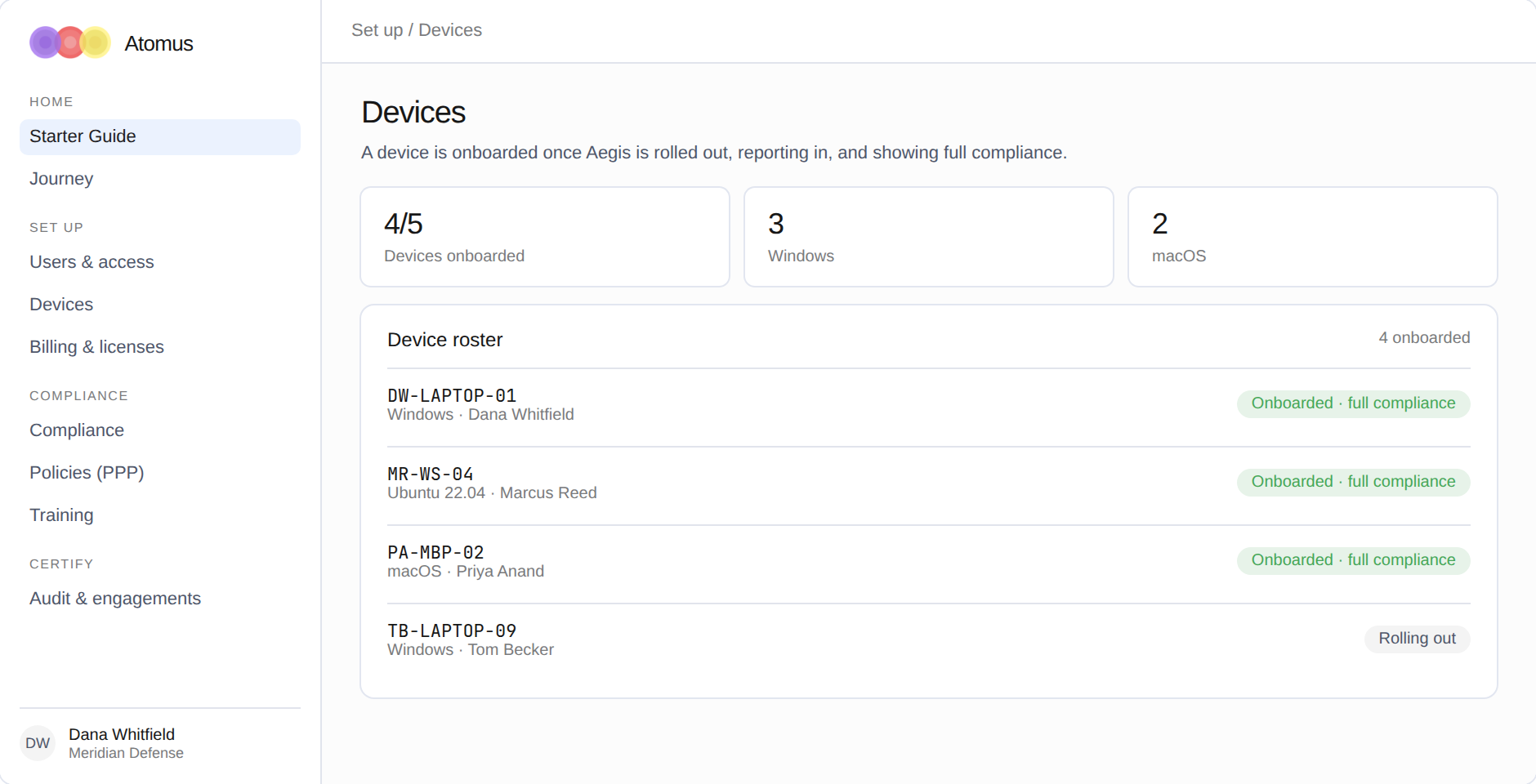
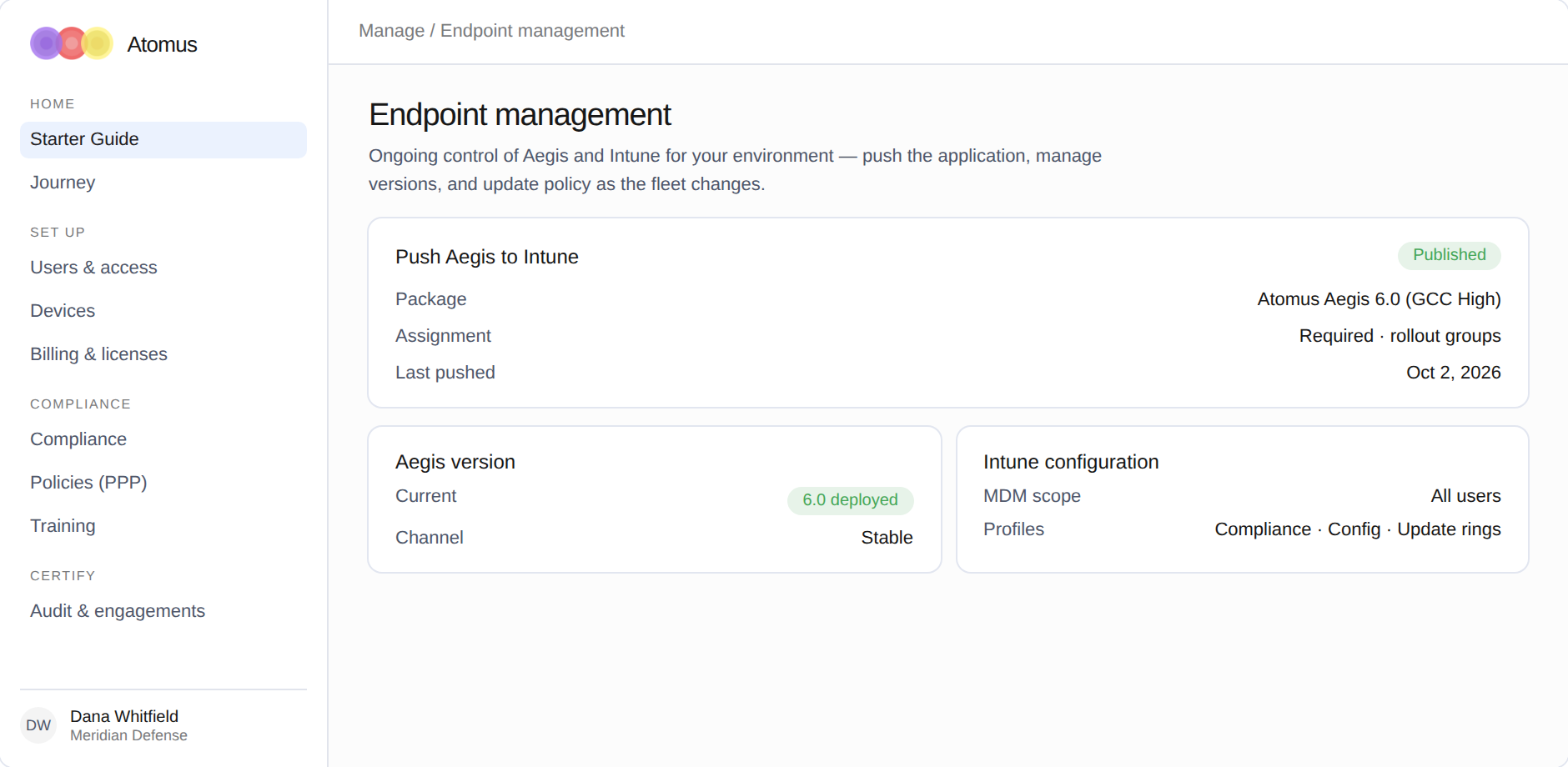
Versions, policy baselines, and device assignment stay current as your fleet changes — pushed by Atomus, visible to you.
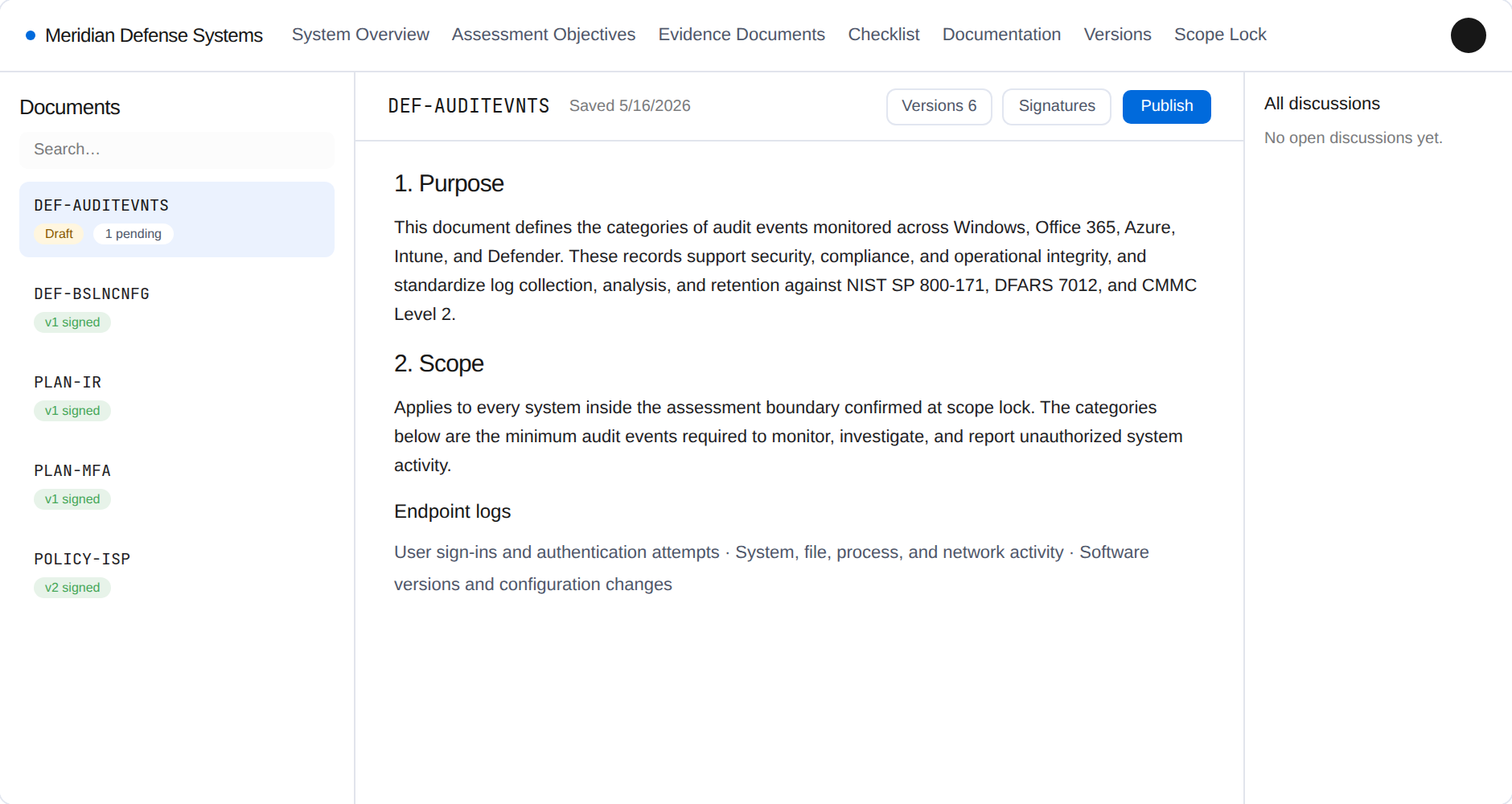
Where Your Documentation Lives — Drafted to Your Scope, Reviewed by Atomus, Signed by You.
Not a template generator. Your policies, procedures, plans, and SSP narratives are built against the environment you actually run, reviewed by our team, and kept current as it changes — and you can customize them to your own workflows. This is what the demo shows.
PPP Editor
We build documentation tailored to your scope that you can customize to your company’s workflows.
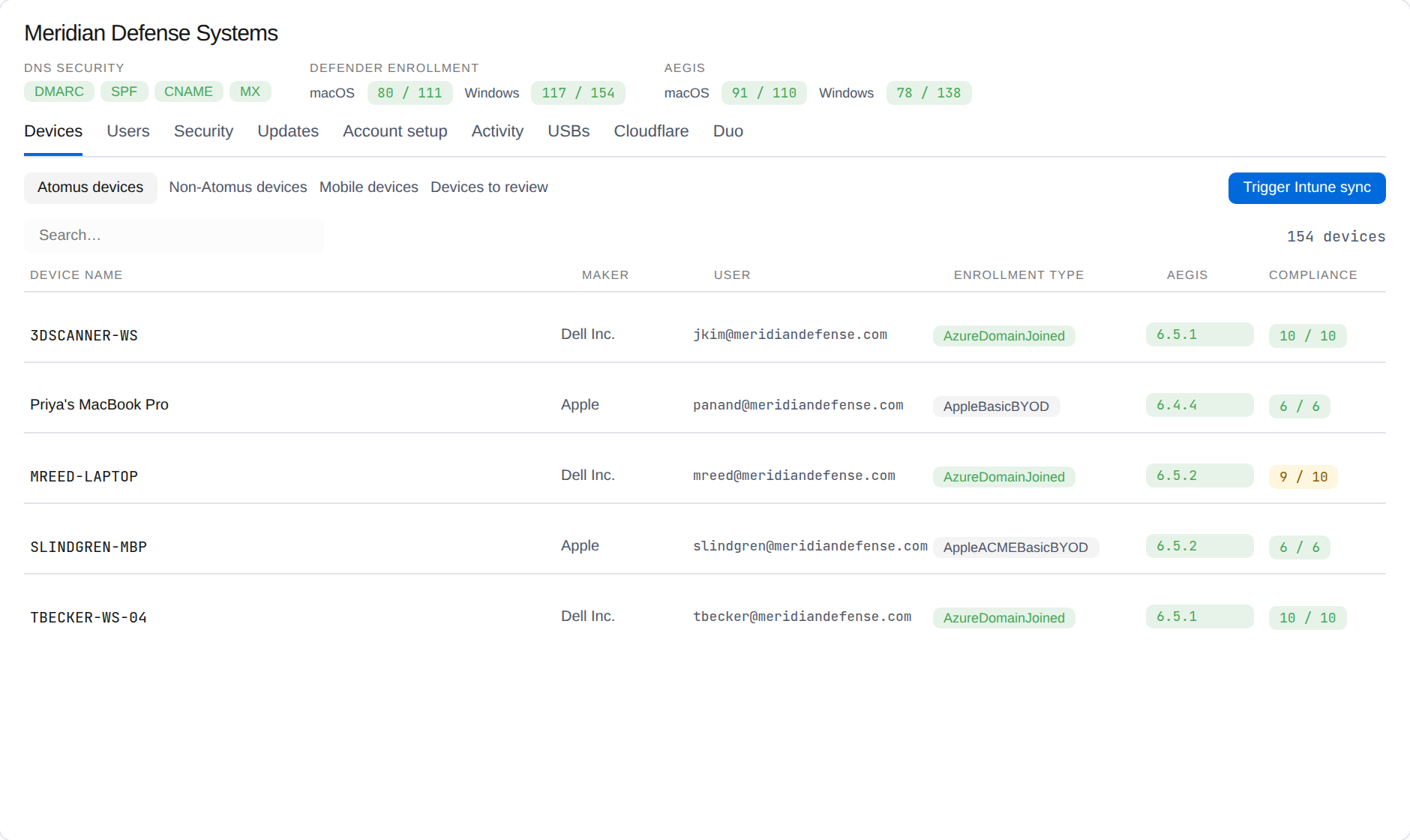
Security Dashboard
Control state across users and devices, what Aegis has implemented, and the alerts Atomus has reviewed on your behalf.
Change Management & Documentation
Every environment change recorded against the documents it affects, so the set an assessor reads matches the system they assess.
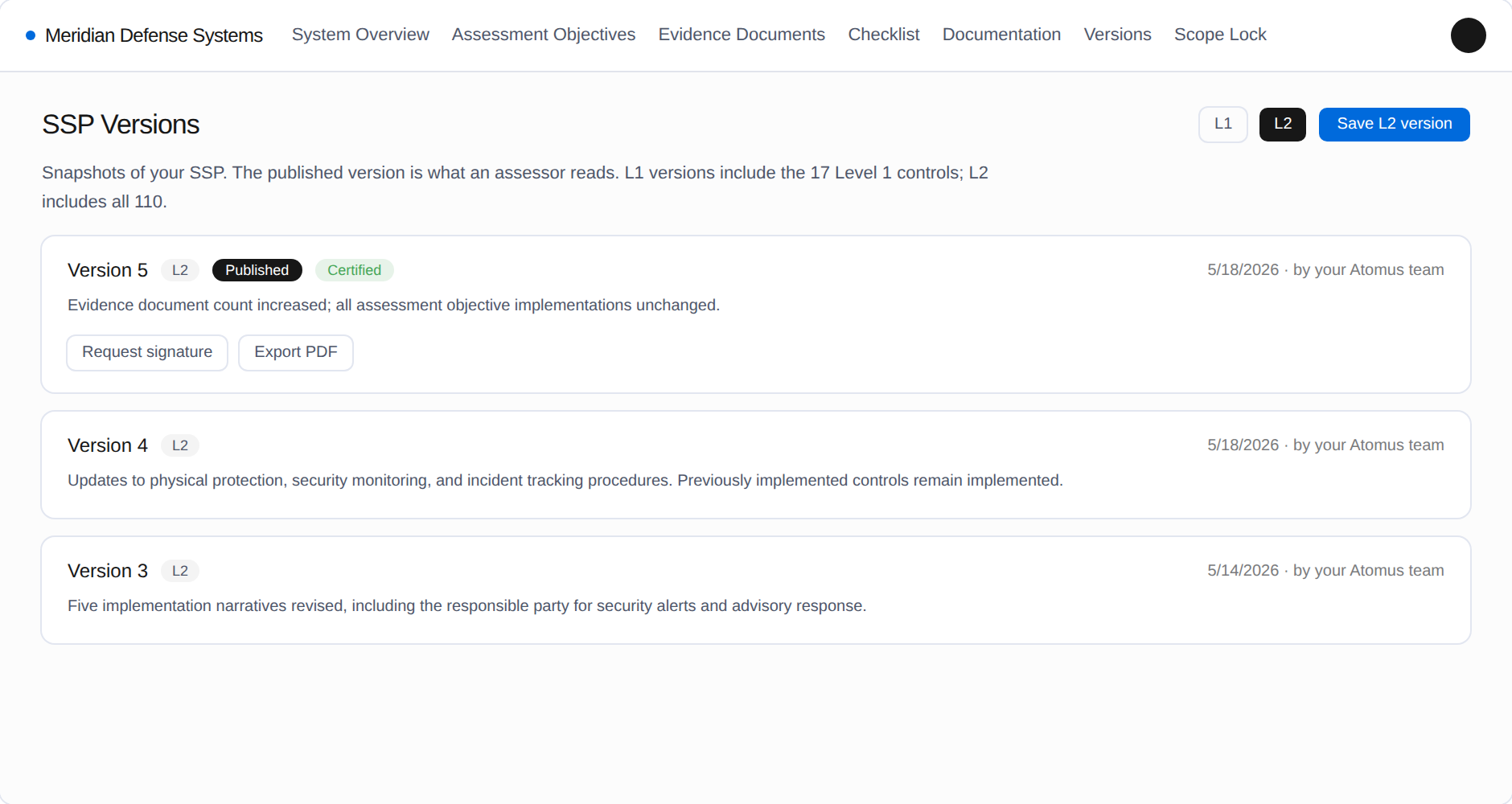
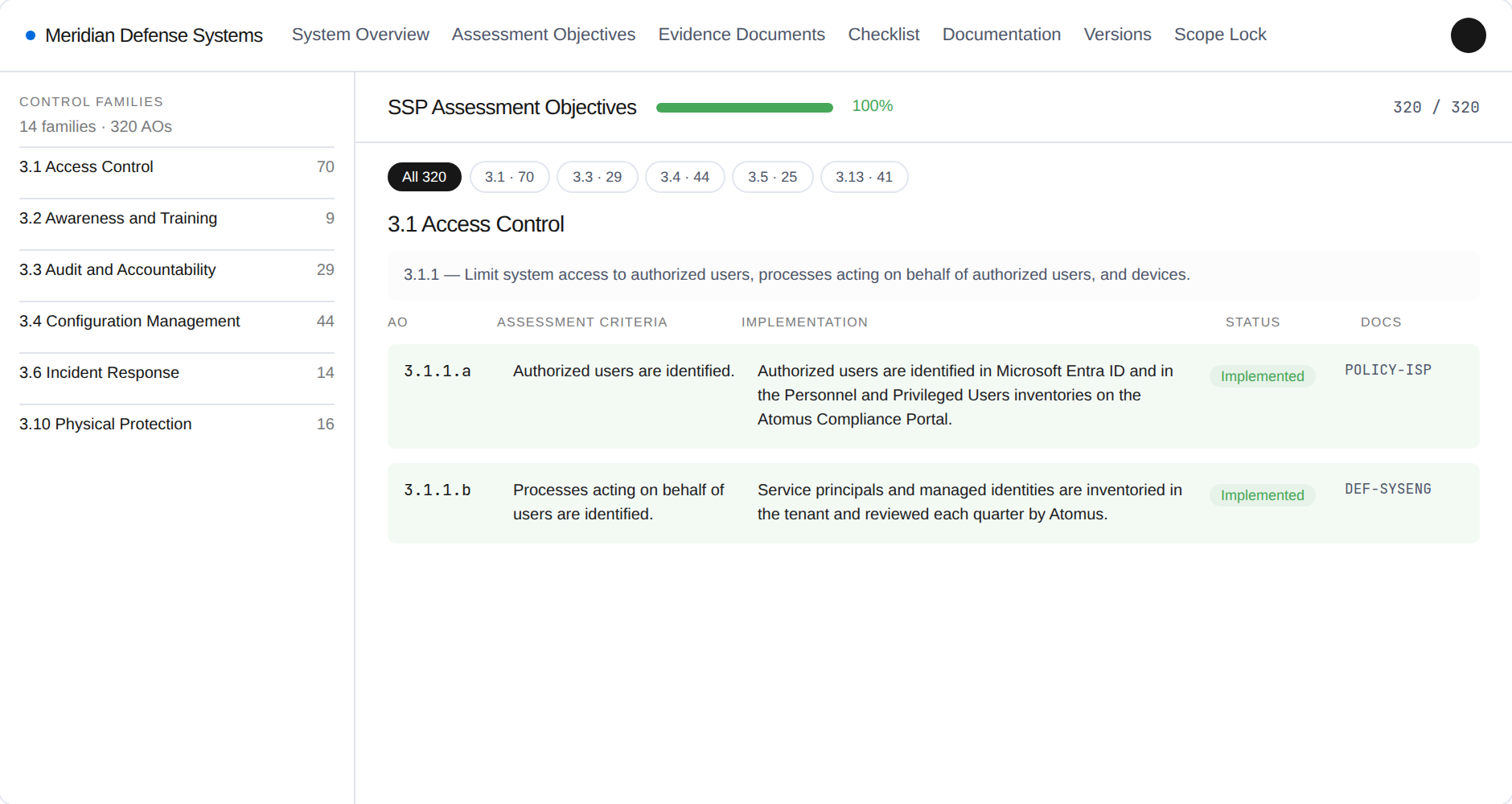
SSP and Assessment Objectives
All 320 assessment objectives, each with its implementation narrative reviewed by Atomus, its status, and the documents and evidence behind it — the same view your assessor works from. Your SPRS score and submission come from the same record.
Getting Through the Assessment
Scoping, evidence, the C3PAO, and what assessment week looks like.
CMMC and NIST 800-171 →What We Run After You Pass
Managed Security, Managed Compliance, government cloud, and licensing.
Services →See the Platform Running Before You Decide Anything.
30-minute demo: the Compliance Portal, the Aegis agent, and what a scoped environment looks like for a company your size. A scoping call comes after.